
If you have ever sat in a doctor's office, been told your labs are normal, and walked out feeling more lost than when you walked in — I wrote this for you.
For fourteen years I've sat across from patients who've done everything right. Clean eating. Pilates. Top-of-the-line supplements. A functional pediatrician for the kids. A meditation app on the home screen. And still — the same quiet conversation: "I don't feel like myself anymore, and no one can tell me why."
What I want to share with you is the single most overlooked driver of chronic dysfunction I see in my practice. It is not a fringe theory. It is published in The Lancet, the BMJ, and at the CDC. It is simply not profitable to talk about in a seven-minute insurance appointment.
"The average American now carries over 200 industrial chemicals in their bloodstream — chemicals that did not exist eighty years ago. The body has no evolutionary playbook for any of them."
This is not your grandmother's world
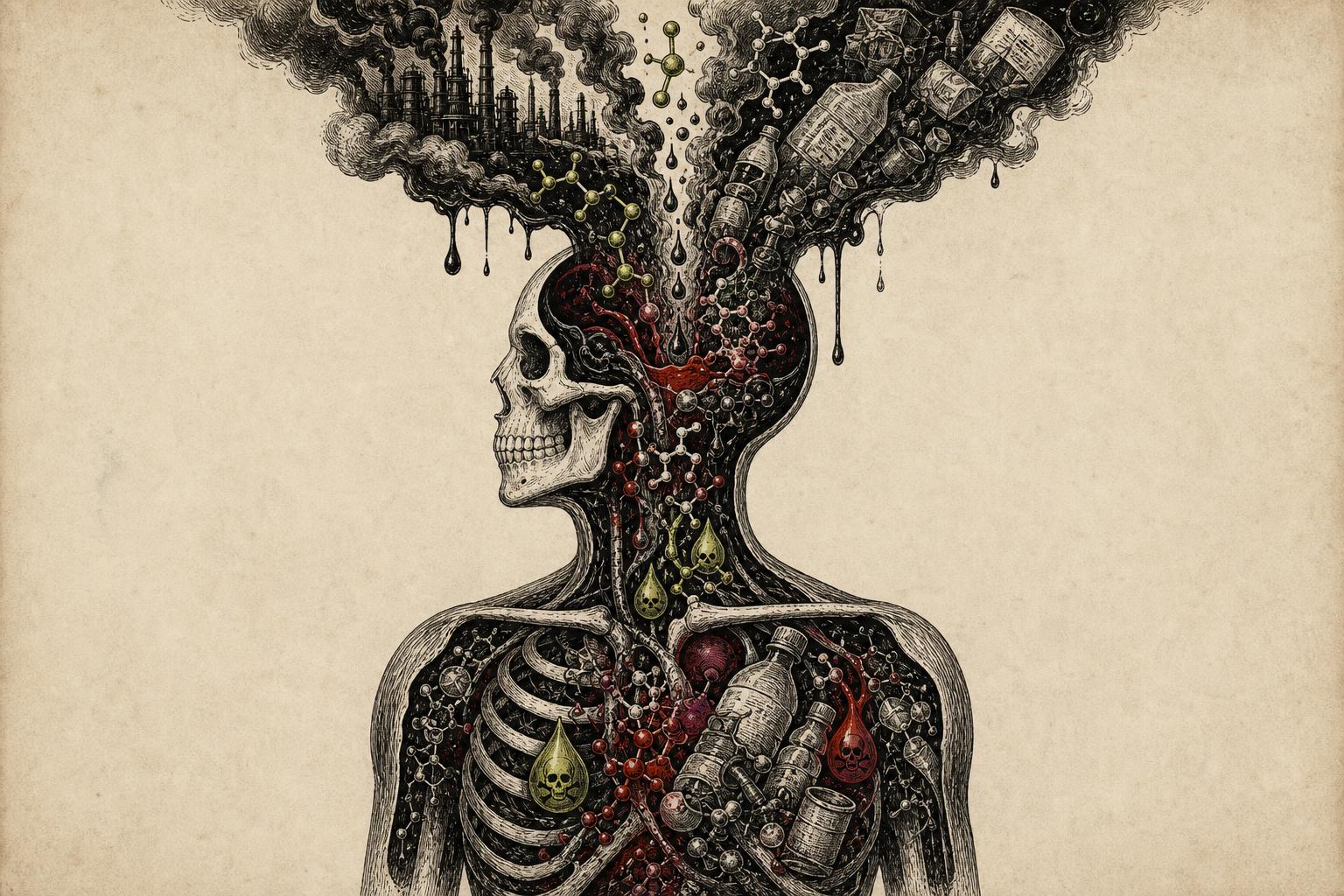
Since 1950, more than 85,000 synthetic chemicals have been introduced into commerce in the United States. Fewer than 1% have ever been tested for safety in humans. None have been tested in combination with each other — yet that is exactly how the body encounters them every day.
The CDC's National Report on Human Exposure to Environmental Chemicals measures the bloodstream of average Americans every two years. The current report finds detectable levels of glyphosate, phthalates, PFAS ("forever chemicals"), parabens, BPA, and heavy metals in over 93% of the population tested — including infants and pregnant women.
synthetic chemicals in U.S. commerce since 1950
ever tested for safety in humans
of Americans test positive for forever chemicals
industrial chemicals in average adult blood
Why your doctor says you're "fine"
Standard lab work was designed in an era before this chemical exposure existed. A conventional panel measures whether you are actively dying — not whether you are slowly dysregulating. TSH can be "in range" while your cells are starving for thyroid hormone. A CBC can be normal while mitochondria are running at 40% capacity. Cholesterol can be perfect while chronic low-grade inflammation eats away at the lining of the blood vessels.
This is the gap I built my practice to close.
"You are not crazy. You are not lazy. You are toxic — and the body is asking for help in the only language it has: symptoms."
The symptoms most people normalize
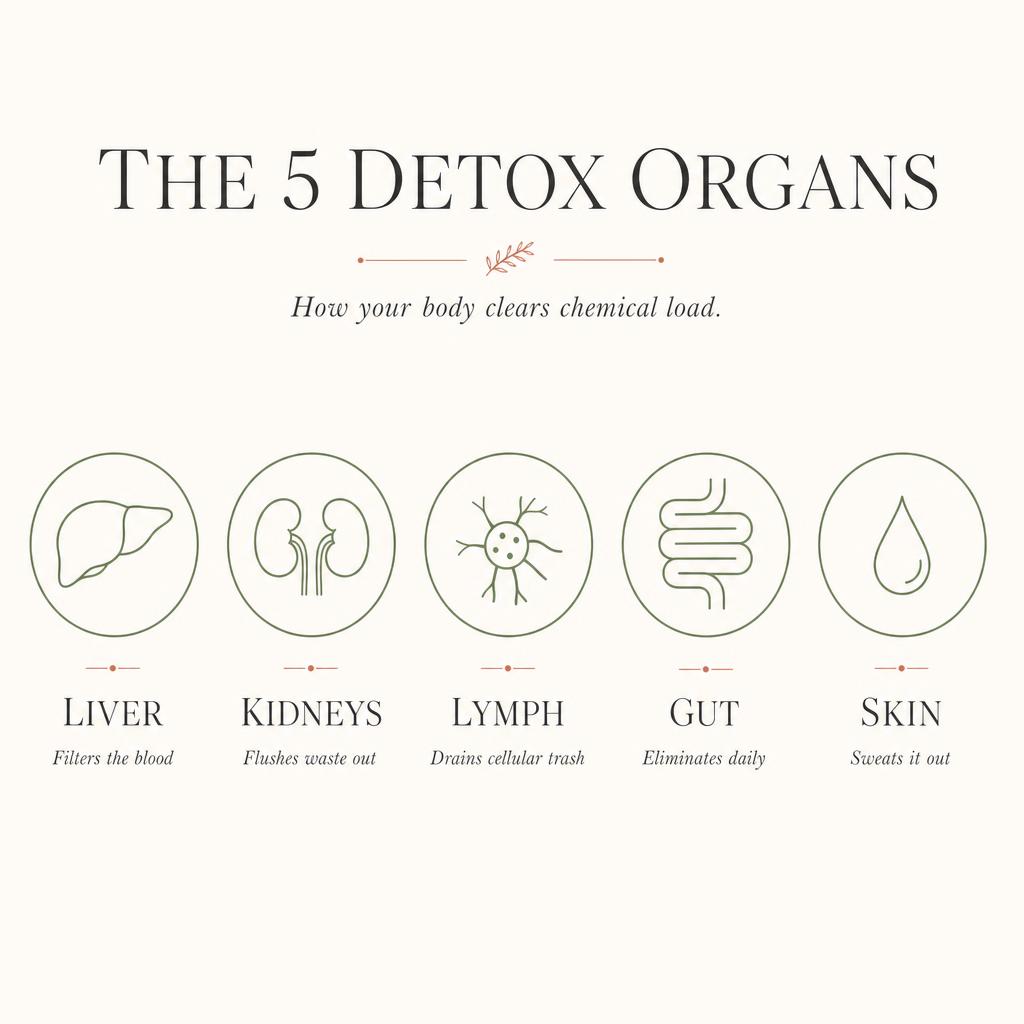
When the liver, gut, kidneys, lymphatic system, and skin can no longer keep up with what's coming in, the body stores toxins in fat tissue, the brain, and the endocrine system. The result is the exact symptom cluster I see day in and day out:
- Bone-deep fatigue that sleep doesn't touch
- Brain fog, word-finding trouble, lost spark
- Hormonal chaos: PMS, perimenopause, low libido, infertility
- Stubborn weight that won't move
- Anxiety, low mood, irritability with no clear cause
- Multiple food sensitivities, bloating, gut irregularity
- Skin issues: acne, eczema, rashes, premature aging
- Recurring headaches or migraines
- Joint pain, stiffness, autoimmune flares
- Poor sleep, waking 2–4am, racing thoughts

If you read that list and felt a chill of recognition — that is not a coincidence. That is your body telling you the truth that no fifteen-minute appointment will.
Six pathways toxins are reaching you right now
Most patients assume toxin exposure means living next to a freeway or working in a chemical plant. The reality is far more intimate. These are the six exposure routes I screen every new patient for.
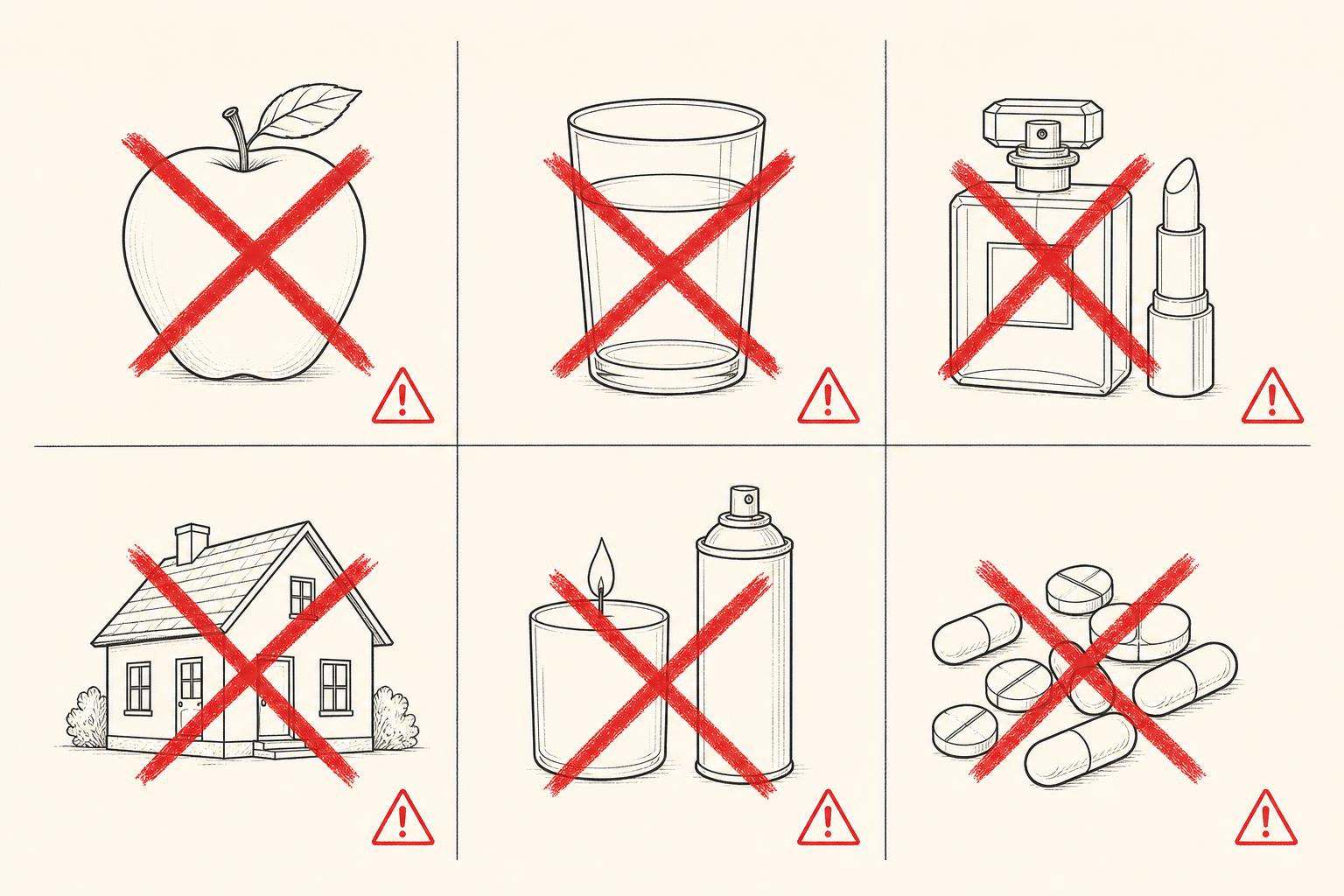
Your food supply
Glyphosate, the active ingredient in Roundup, is now in 75% of rainwater and 60% of breastmilk. Conventional produce, grains, oils, and animal feed are the primary delivery system.
Tap and bottled water
PFAS, chlorine byproducts, microplastics, and pharmaceutical residue are detected in virtually every U.S. municipal supply — and most bottled water tests no better.
Personal care products
The average woman applies 168 chemicals to her skin before 9am — phthalates, parabens, synthetic fragrance — absorbed directly into the bloodstream, bypassing the liver.
The home environment
Furniture flame retardants, mold from invisible water damage, off-gassing from carpets and new-car smell, and chronic EMF exposure all add to the daily load.
Indoor air
EPA research finds indoor air is two to five times more polluted than outdoor air. Candles, cleaning products, and synthetic fragrance create a 24-hour exposure most people never escape.
Pharmaceuticals
Birth control, antibiotics, PPIs, and NSAIDs all alter the gut microbiome and detox pathways — and most patients are on them for years without ever being told the downstream cost.
Why the window is closing
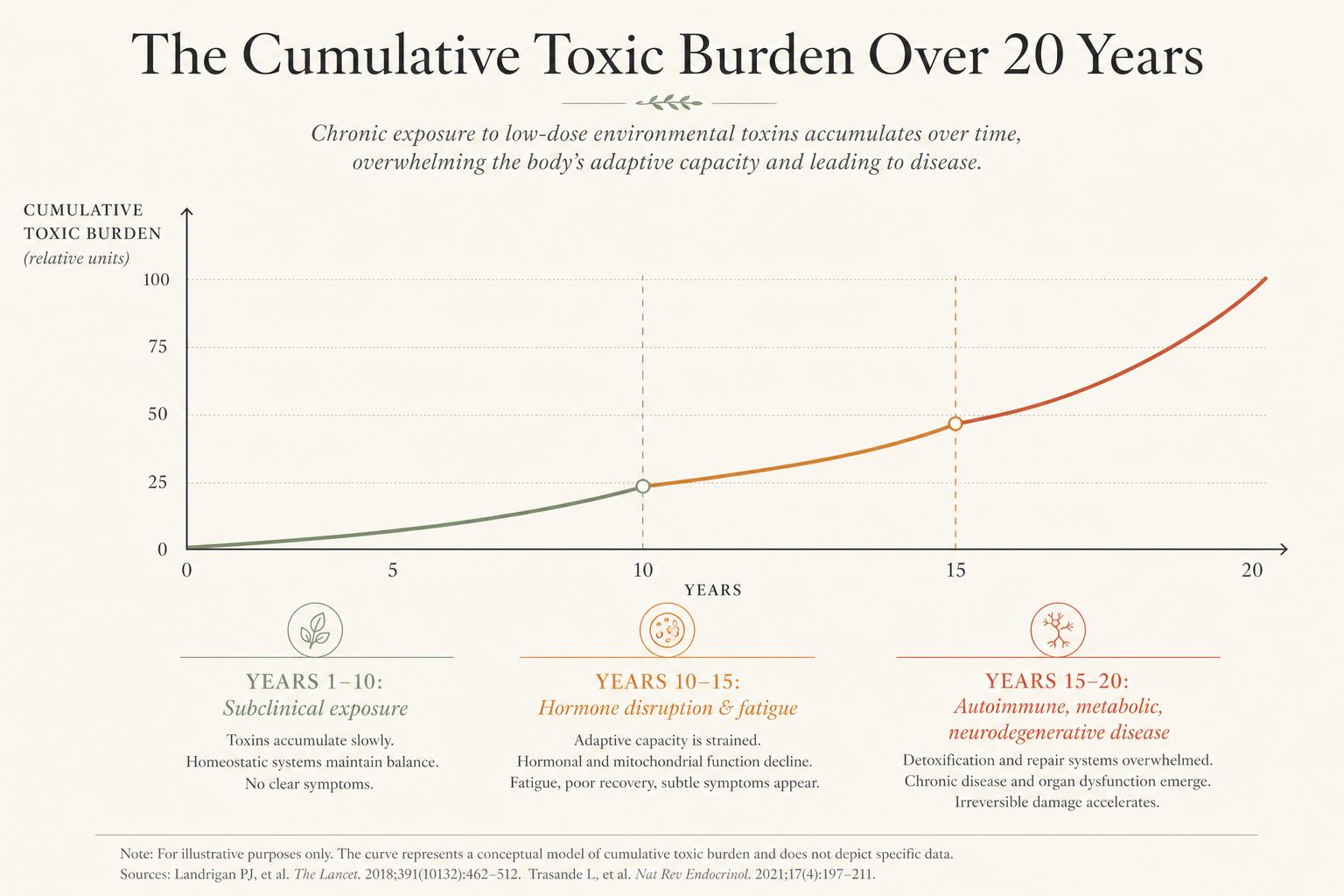
Peer-reviewed work on cumulative toxic burden (Genuis & Kelly, Journal of Environmental and Public Health, 2014) shows a predictable trajectory: subclinical exposure for five to ten years, followed by measurable hormone disruption and fatigue, followed by diagnosable autoimmune, metabolic, or neurodegenerative disease in years ten through twenty. The body can detoxify only as fast as its slowest pathway — and chronic stress, poor sleep, and a sluggish gut can drop that rate by 60%.
The good news: the same body that has been dysregulating for years is also remarkably responsive when you stop adding fuel to the fire and start systematically clearing it out — with proper testing, targeted protocols, and someone who knows how to read the case.
Before you read another word, take sixty seconds and measure your own exposure. The screen below is the same one I use in intake with every new patient.